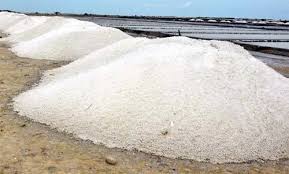
SALT, or sodium chloride (NaCl), is a versatile compound with various properties and uses. It’s a key component of many foods, essential for human health, and plays a role in numerous industrial processes. Its primary uses include flavoring and preserving food, as well as in manufacturing various products.
Properties of Salt:
· Appearance: Salt appears as white, odorless, and crystalline solids, with a salty taste.
· Solubility: It’s highly soluble in water, forming a neutral solution.
· Chemical Structure: Salt is an ionic compound composed of positively charged sodium ions (Na+) and negatively charged chloride ions (Cl-).
· Electrical Conductivity: Salt solutions conduct electricity due to the presence of free ions.
· Melting and Boiling Points: Salt melts at 801°C and begins to vaporize at 1413°C.
· Hardness: It has a Mohs hardness of 2.5.
· Toxicity: Salt is of low toxicity, and sodium is an essential element for human health.
· Hygroscopic: Salt can absorb moisture from damp atmospheres, making it hygroscopic.
Uses of Salt:
· Food:
· Seasoning: Salt enhances the flavor of food, being a common seasoning.
· Preservation: It inhibits the growth of microorganisms, thus preserving food (e.g., in pickles, meat curing).
· Textural Changes: Salt can alter the texture of foods, such as in bread-making.
· Industry:
· Chemical Production: It’s used to produce caustic soda and chlorine, essential in various industrial processes.
· Manufacturing: Salt is involved in the production of plastics, paper pulp, and other materials.
· Other Uses:
· Medicine: Salt solutions (like physiological saline) are used in pharmacy and medicine.
· Cleaning: Salt can be used for cleaning carpets, removing stains, and revitalizing sponges.
· Other household uses: Salt can be used to keep milk fresh, revive overbrewed coffee, or eliminate odors.
· Ice melting: Salt is used to melt ice in winter in cold countries.
Types of Salt:
· Table salt: Commonly used for seasoning and baking.
· Sea salt: Known for its unique flavor and texture.
· Kosher salt: Used for koshering meat.
· Himalayan salt: Known for its trace mineral content.
· Fleur de sel: A type of sea salt, often used as a finishing salt.
· Flake salt: Used for sprinkling on various food
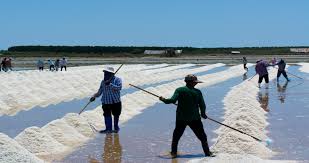
Salt mining is a significant economic activity in Tanzania, with both modern and traditional methods used to extract salt. Tanzania’s salt production is primarily sodium chloride (NaCl). Salt is a valuable commodity in East Africa and is the second most valuable mineral product in Tanzania.
Methods of Salt Mining in Tanzania:
· Traditional methods:
o Evaporation of brine: Brine from springs or lakes is evaporated to produce salt crystals.
o Crust gathering: Salt crusts are gathered from the edges of saline lakes or springs.
o Soil leaching: Soil containing salt is leached with water, and the resulting brine is evaporated.
o Plant ash extraction: Salt is extracted from plant ashes.
· Modern salt works: Modern salt works, like those at Uvinza, Ivuna, and along the coast, use techniques like evaporation of brine to produce salt in larger quantities.
· Small-scale miners: Small-scale miners often operate seasonally and are weather-dependent.
Key Salt Mining Areas:
· Lindi Municipality:
Individual producers extract salt from seawater and mine it in the Machore area.
· Uvinza:
Uvinza Salt Works, with numerous brine springs, has been used for salt mining since the Iron Age.
· Dodoma Region:
The Jitegemee group extracts rock salt from salt trees in the Chinangali region.
· Lindi Region:
Salt producers in Lindi have sought government support to boost production.
Salt Production Volume:
· In 2022, Tanzania produced approximately 182,000 metric tons of salt.
· Salt production reached its highest in 2016 at 178,200 metric tons.
Challenges and Opportunities:
· Small-scale producers face challenges:
Small-scale miners often face weather-dependent production, a lack of access to iodine for iodized salt production, and the need for government support to improve their operations.
· Potential for growth:
The Tanzanian government is actively working to boost salt production and refine it for better quality and distribution, according to the Tanzania Second Five-Year Development Plan.
· Safety concerns:
Safety awareness is low in some areas, with potential hazards including falling or slipping in pits and equipment failure