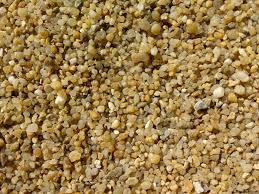
SAND, a naturally occurring granular material, exhibits various properties and finds diverse applications. Its granular structure, composed of finely divided mineral particles, makes it suitable for construction, agriculture, and various other uses, including environmental preservation.
Properties of Sand:
· Grain Size:
Sand is characterized by its grain size, typically ranging from 0.06mm to 2mm.
· Composition:
Sand is primarily composed of quartz, with other minerals depending on its origin and location.
· Color and Shape:
Sand’s color and shape vary depending on its origin and mineral composition.
· Density and Specific Gravity:
Sand has a specific gravity of around 2.60 to 2.80 and bulk density affected by moisture and compaction.
· Permeability and Porosity:
Sand’s permeability (ability to allow liquids to pass through) and porosity (void content) influence its use in drainage and filtration systems.
· Thermal Conductivity:
Sand’s moderate thermal conductivity makes it suitable for insulation purposes.
· Hardness:
Silica sand, a common type of sand, exhibits a hardness of around 7 on the Mohs scale, making it suitable for abrasive applications.
Uses of Sand:
· Construction: Sand is a crucial component in concrete, mortar, plaster, and other construction materials.
· Agriculture: Sandy soils are ideal for certain crops due to their excellent drainage and aeration.
· Environmental Preservation: Sand is used in beach nourishment projects to combat erosion and in the creation of artificial reefs.
· Industrial Processes: Sand is used in glassmaking, air filtration, and as an abrasive material.
· Other Applications: Sand is used in aquaria, sandboxes, and decorative purposes.

SAND, a naturally occurring granular material, exhibits various properties and finds diverse applications. Its granular structure, composed of finely divided mineral particles, makes it suitable for construction, agriculture, and various other uses, including environmental preservation.
Properties of Sand:
· Grain Size:
Sand is characterized by its grain size, typically ranging from 0.06mm to 2mm.
· Composition:
Sand is primarily composed of quartz, with other minerals depending on its origin and location.
· Color and Shape:
Sand’s color and shape vary depending on its origin and mineral composition.
· Density and Specific Gravity:
Sand has a specific gravity of around 2.60 to 2.80 and bulk density affected by moisture and compaction.
· Permeability and Porosity:
Sand’s permeability (ability to allow liquids to pass through) and porosity (void content) influence its use in drainage and filtration systems.
· Thermal Conductivity:
Sand’s moderate thermal conductivity makes it suitable for insulation purposes.
· Hardness:
Silica sand, a common type of sand, exhibits a hardness of around 7 on the Mohs scale, making it suitable for abrasive applications.
Uses of Sand:
· Construction: Sand is a crucial component in concrete, mortar, plaster, and other construction materials.
· Agriculture: Sandy soils are ideal for certain crops due to their excellent drainage and aeration.
· Environmental Preservation: Sand is used in beach nourishment projects to combat erosion and in the creation of artificial reefs.
· Industrial Processes: Sand is used in glassmaking, air filtration, and as an abrasive material.
· Other Applications: Sand is used in aquaria, sandboxes, and decorative purposes.